
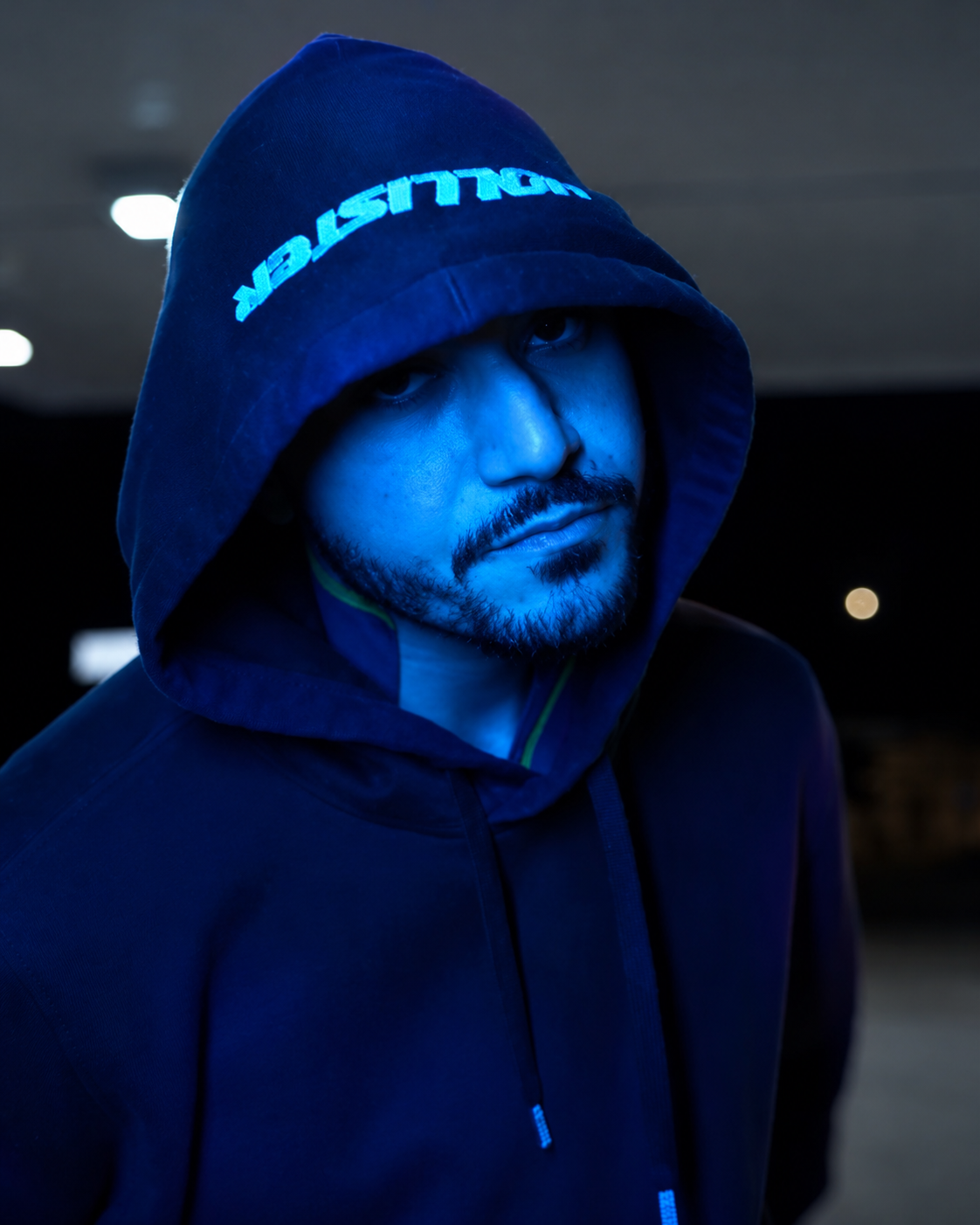
Curiche, In His Own Words: Freestyle, Migration and What Comes Next
This interview was conducted in Spanish. Curiche’s responses have been translated and lightly edited for clarity and length. His original Spanish responses are preserved throughout the interview.
There is a part of Curiche that his music communicates directly, and another that remains behind the songs.
Born in Porlamar and shaped by both Isla de Margarita and Anaco, Richard — known as Curiche long before he ever needed an artist name — first found expression through freestyle. What began as improvisation eventually became a way to translate experiences, emotions and memories that were not always easy to explain otherwise.
His music has touched on struggle, ambition, resilience and life in the street, but behind those ideas are specific stories: family, migration, uncertainty, mistakes, personal growth and an artistic identity that is still evolving.
After No Creo, Curiche made an unusual decision: he stopped releasing music for a period without stopping the creative process. The silence became preparation.
Cabilliant sent Curiche a written interview to document that history in his own words.
From Porlamar to Anaco
Cabilliant: You were born in Venezuela and part of your story is closely connected to Isla de Margarita. Where were you born, where did you grow up, and which places helped shape the person and artist you are today?
Curiche: I was born in Porlamar, and without a doubt Margarita is one of the most important places in my life. It is where I was born, where much of my family is, and where I lived some of the most special moments of my life.
My best vacations, some of my best experiences and many of my happiest memories were always on the island. My childhood, my youth, my family and so many experiences that are part of who I am today are connected to that place.
Even though I spent a large part of my life in Anaco, my heart was always connected to Margarita. Anaco has also been very important to me and has played a fundamental role in my growth and my story.
Original Spanish
Nací en Porlamar, y sin duda alguna, Margarita es uno de los lugares más importantes de mi vida. Es la tierra donde nací, donde está gran parte de mi familia y donde viví algunos de los momentos más especiales de mi vida.
Mis mejores vacaciones, mis mejores eventos y muchos de mis recuerdos más felices siempre estuvieron en la isla. Allí quedaron recuerdos de mi infancia, mi juventud, mi familia y tantas experiencias que forman parte de quien soy hoy.
A pesar de haber vivido gran parte de mi vida en Anaco, mi corazón siempre estuvo ligado a Margarita. Anaco también ha sido un lugar muy importante para mí y ha formado parte fundamental de mi crecimiento y de mi historia.
Cabilliant: What role did music have in your life during those years?
Curiche: From a very young age I had an enormous curiosity about music. Even though there was no direct musical influence in my family, they always supported me in following what I was passionate about.
Music became a fundamental part of my life. It was there through every mood: the happy moments, the difficult ones, when I needed motivation and also when I simply needed to escape reality for a while.
For me, music has always been a form of healing, motivation and expression. Many times it helped me understand what I was feeling when I did not even know how to explain it with words.
Original Spanish
Desde pequeño siempre tuve una curiosidad enorme por la música. A pesar de que en mi familia no hubo una influencia musical directa, siempre conté con su apoyo para seguir aquello que me apasionaba.
La música, desde muy chico, se convirtió en una parte fundamental de mi vida. Estuvo presente en todos mis estados de ánimo: en los momentos felices, en los momentos difíciles, cuando necesitaba motivación y también cuando simplemente necesitaba escapar un poco de la realidad.
Para mí, la música siempre fue una cura, una motivación y una forma de expresarme. Muchas veces fue la manera en la que pude entender lo que sentía cuando ni siquiera sabía cómo explicarlo con palabras.
Before the Songs, There Was Freestyle
Cabilliant: How did you begin rapping or writing?
Curiche: I was always a freestyler. From a very young age I liked improvising and playing with words. I always felt it was a gift God had given me — an ability to express what I carried inside through music.
My first songs began simply as a hobby. I did it because I enjoyed it, because it was fun and because it gave me a way to express myself. At first I never imagined it could become something more.
But over time I started noticing that people identified with what I was doing, enjoyed the songs and felt something through my words. That changed the way I saw it.
I stopped treating it only as a hobby and decided to take it more seriously. I started writing more, working on songs and searching for an identity of my own.
Original Spanish
Siempre fui freestyler. Desde muy pequeño me gustaba improvisar y jugar con las palabras. Siempre sentí que era un don que Dios me había dado, una facilidad para poder expresar lo que llevaba dentro a través de la música.
Si recuerdo mis primeras canciones, todo comenzó simplemente como un hobby. Lo hacía porque me gustaba, porque me divertía y porque era una manera de expresarme. Nunca imaginé al principio que pudiera convertirse en algo más.
Pero con el tiempo empecé a notar que muchas personas se identificaban con lo que hacía, que disfrutaban mis canciones y que mis palabras podían generar algo en los demás. Eso fue lo que me hizo cambiar la manera de verlo.
Dejé de verlo solamente como un hobby y decidí tomarlo más en serio. Empecé a escribir más, a trabajar en mis canciones y a buscar una identidad propia.
Cabilliant: What influenced you most when you were starting?
Curiche: Without a doubt, Arcángel was always my biggest influence. More than an inspiration, he was a reference who shaped the way I looked at music from a young age.
I also loved going to parks and plazas to improvise, being around people and participating in those circles where everybody wanted to show what they could do. I liked competing too — facing other freestylers and seeing how far I could take my words.
Original Spanish
Sin duda alguna, Arcángel siempre fue mi mayor influencia. Más que una inspiración, fue una referencia que marcó mucho mi manera de ver la música desde pequeño.
Siempre me gustó ir a los parques y a las plazas a improvisar, rodearme de personas y participar en esos círculos donde todos queríamos demostrar lo que teníamos. También me gustaba competir, enfrentarme a otros improvisadores y ver hasta dónde podía llegar con mis palabras.
A Name That Was Already There
Cabilliant: Where does the name “Curiche” come from?
Curiche: The name comes from my older brother. When I was a kid, he used to play around with my real name, Richard, and little by little the nickname “Curiche” came out of that.
Without realizing it, the nickname stayed. Eventually practically everyone in my neighborhood called me Curiche or simply Curi. There were even people who did not know my real name because, to them, I had always been Curiche.
When I started becoming more serious about music, I realized the name was already part of me. I did not have to invent an artist name. In a way, life had already given me one when I was a kid.
It came from my family, my childhood and my neighborhood. That made it much more special to me.
Original Spanish
Jajaja, el nombre viene de mi hermano mayor. Cuando yo era niño, él hacía juegos con mi nombre, Richard, y poco a poco fue sacando el apodo “Curiche”. Al principio era simplemente un nombre que me causaba gracia, pero con el tiempo empezó a llamarme así cada vez más.
Sin darme cuenta, el apodo se fue quedando. Llegó un punto en el que prácticamente todo el mundo en mi barrio me llamaba Curiche o simplemente Curi. Incluso había personas que ni siquiera sabían mi nombre real, porque para ellos yo siempre había sido Curiche.
Cuando empecé a involucrarme más seriamente en la música, sentí que ese nombre ya era parte de mí. No tuve que inventar un nombre artístico; de alguna manera, la vida ya me lo había dado desde niño.
Ahí supe que “Curiche” iba a ser mi nombre artístico. Era un nombre que tenía una historia, venía de mi familia, de mi infancia y de mi barrio. Y eso lo hacía mucho más especial para mí.
Cabilliant: How would you describe Curiche as an artist?
Curiche: Someone who is always trying to improve and do things differently. Curiche is basically a part of me — my roots, what I have lived through and everything that has helped me grow.
I like experimenting, mixing styles and doing things my own way. I do not want to be the same as anyone else. I want Curiche to have his own essence and for people to feel that when they listen to my music.
Original Spanish
Me describo como alguien que siempre está buscando mejorar y hacer cosas diferentes. Curiche es básicamente una parte de mí, de mis raíces, de lo que he vivido y de todo lo que me ha hecho crecer. Me gusta mucho experimentar, mezclar estilos y hacer las cosas a mi manera. No quiero ser igual a nadie, quiero que Curiche tenga su propia esencia y que la gente pueda sentir eso cuando escuche mi música.
Venezuela Stays in the Music
Cabilliant: Your music touches on struggle, the street, resilience, success and personal experiences. How much of what you write comes directly from your own life?
Curiche: A lot of what I write comes directly from experiences I have lived through — good moments, bad moments, situations I have had to face and things I have learned along the way.
There are also things I observe or that come from my surroundings, but I always try to interpret them in my own way and turn them into something that carries my essence.
That is why struggle, resilience and success are so present. To me they are not just concepts. They are part of a process I am still living through.
Original Spanish
Todo, mucho de las cosas que escribo vienen directamente de experiencias que he vivido, de momentos buenos y malos, de situaciones que me han tocado enfrentar y de cosas que he aprendido en el camino. También hay cosas que observo o que vienen de mi entorno, pero siempre trato de llevarlas a mi manera y convertirlas en algo que tenga mi esencia. Creo que por eso están tan presentes temas como la lucha, la resiliencia y el éxito, porque para mí no son solamente conceptos, son parte de un proceso que todavía estoy viviendo.
Cabilliant: Are there aspects of Venezuelan culture or Margarita that remain present in your music even if listeners may not immediately recognize them?
Curiche: I think so. There is a lot of Venezuela, and especially Margarita, in my music: in the way I speak, the way I tell stories, the picardía, the sense of humor and that particular energy we have as Venezuelans.
Original Spanish
Creo que sí, aunque muchas veces no sea algo que se note de manera evidente. Hay mucho de Venezuela y especialmente de Margarita en mi música: en mi forma de hablar, en la manera de contar las cosas, en la picardía, en el sentido del humor y en esa energía que tenemos los venezolanos.
Finding Cabilliant
Cabilliant: How did your relationship with Cabilliant begin?
Curiche: It started through a friend who was beginning to get involved in music production. I remember sending him a song so he could help me with some arrangements, and through him I ended up connecting with one of Cabilliant’s producers, who already had a lot of experience in music.
From the first moment, I felt an incredible energy. I really liked the group, their goals and, above all, their desire to move forward and do things properly.
I felt like we were looking for something similar and that I could learn a lot by surrounding myself with people who had that mentality. So I did not hesitate to join the group.
Original Spanish
Todo comienza con una amistad que estaba empezando a involucrarse en la producción musical. Recuerdo que le pasé un tema para que me ayudara con algunos arreglos y, a través de él, terminé conectando con uno de los productores de Cabilliant, que ya tenía mucha experiencia dentro de la música.
Desde ese primer momento sentí una vibra increíble. Me gustaron mucho la energía del grupo, las metas que tenían y, sobre todo, las ganas de salir adelante y de hacer las cosas bien.
Sentí que estábamos buscando algo parecido y que podía aprender mucho estando rodeado de personas con esa mentalidad. Por eso no dudé en unirme al grupo.
Cabilliant: What has Cabilliant meant to your development?
Curiche: Cabilliant has been fundamental to my growth as an artist. I have had the opportunity to learn a little bit about almost every part of music.
I have learned about production, recording and vocal processing, but also about social media, image and everything an artist needs to understand in order to develop a career and go further.
Original Spanish
Sin duda alguna, Cabilliant ha sido fundamental en mi crecimiento como artista. Prácticamente, me han enseñado gran parte de lo que sé hoy y he tenido la oportunidad de aprender un poco de todo dentro de la música.
He aprendido sobre producción, grabación y manejo de voces, pero también sobre redes sociales, imagen y todo lo que un artista necesita conocer para poder desarrollar una carrera y llegar lejos.
What Was Behind No Creo
Cabilliant: What was happening in your life when No Creo was created?
Curiche: During that period of my life, I had to deal with a lot of judgment. There were people judging the way I was without really knowing what I was living through, what had happened before or everything I had worked through to reach that point.
A lot of the time people only see the result. They do not know the process behind it.
Original Spanish
En esa etapa de mi vida también tuve que enfrentar muchos juicios. Había personas que juzgaban mi forma de ser sin conocer realmente lo que estaba viviendo, lo que había pasado antes o todo lo que había trabajado para llegar hasta ese punto.
Muchas veces la gente solamente ve el resultado, pero no conoce el proceso que hay detrás.
Cabilliant: There is a line in No Creo with an especially personal story behind it. What does it mean?
Curiche: There are many references in my music, but there is one rhyme that has a much more personal meaning to me:
“Where were you when I was with Fito, with nothing to eat?”
Fito is my first cousin, and he was with me from the first day of my migration to Argentina. That line refers directly to all the difficult moments we experienced together during that period.
For someone listening to the song, it might simply sound like another line or rhyme. For us, it represents an entire story. It represents moments of need, uncertainty and the difficulties we had to face together.
Original Spanish
Hay muchas referencias en mi música, pero la gran mayoría son cosas que, con una búsqueda en internet, se pueden entender o descubrir. Sin embargo, hay una rima que para mí tiene un significado mucho más personal:
“¿Dónde estaba usted cuando estaba con Fito, sin nada para comer?”
Fito es mi primo hermano y estuvo conmigo desde el primer día de mi migración a Argentina. Esa rima hace referencia directamente a todos los momentos difíciles que vivimos juntos durante esa etapa.
Para alguien que escucha la canción puede ser simplemente una frase o una rima más, pero para nosotros representa una historia completa. Representa momentos de necesidad, incertidumbre y dificultades que tuvimos que enfrentar juntos.
Cabilliant: What does No Creo mean to you today?
Curiche: It was a very important stage for me because it helped me understand much better how I needed to move, not only as an artist but also as a person within this industry.
That is why I decided not to release music for a while. It does not mean I stopped making music or lost the desire to do it. Quite the opposite.
I have used this time to prepare, learn, work on myself and better understand what I want to do.
Original Spanish
Creo que fue una etapa muy importante para mí, porque me ayudó a entender y a comprender mucho más cómo debía manejarme, no solamente como artista, sino también como persona dentro de esta industria.
Por eso decidí no sacar más música durante un tiempo. No significa que haya dejado de hacer música o que haya perdido las ganas, todo lo contrario. He aprovechado este tiempo para prepararme, aprender, trabajar en mí y entender mejor qué quiero hacer.
What We Have Not Heard Yet
Cabilliant: Is there a side of you that has not really appeared in your music yet?
Curiche: I think my sadder side is still something that has not really appeared in my music. There are moments when I miss my family a lot, when I feel nostalgic and really want to be with them again, but until now I have not completely shown that side of myself.
I think it is part of my personality and my story that I still need to explore musically.
Original Spanish
Creo que mi lado triste es una parte de mí que todavía no se ve realmente en mi música. Hay momentos en los que extraño mucho a mi familia, siento nostalgia y tengo muchas ganas de volver a estar con ellos, pero hasta ahora no he mostrado completamente esa faceta.
Creo que es una parte de mi personalidad y de mi historia que todavía tengo pendiente explorar musicalmente.
Cabilliant: Is there an unreleased song with a particularly important story?
Curiche: There is a song that has not been released yet called 27. It tells a large part of my life and one of the most important journeys I have experienced.
Without a doubt, it describes much of what I had to go through to get where I am today.
Original Spanish
Hay un tema que aún no ha salido, que se llama “27”, y que relata una gran parte de mi vida, una de las travesías más importantes que he vivido. Sin duda, es una canción que describe mucho de lo que tuve que pasar para llegar hasta donde estoy hoy.
Creating From Improvisation
Cabilliant: How do you normally begin working on a song?
Curiche: Usually I start by looking for an idea of what I want to communicate. Sometimes it begins with a situation, a feeling or simply something that is in my head at that moment.
Other times it happens completely differently. I find a sound I like, begin improvising and search for a melody until something catches me. From there I start writing and develop the idea little by little.
That combination of improvisation and writing feels very natural to me because it comes from my roots in freestyle. Many times the first phrase or melody appears while improvising, and then I build the song around it.
Original Spanish
Por lo general, primero busco una idea de lo que quiero transmitir. A veces parto de una situación, un sentimiento o simplemente de algo que tengo en la cabeza en ese momento.
Otras veces es completamente diferente: encuentro un sonido que me gusta, comienzo a improvisar y voy buscando una melodía hasta que aparece algo que me atrapa. A partir de ahí empiezo a escribir y voy desarrollando la idea poco a poco.
Creo que esa combinación entre improvisar y escribir es muy natural para mí, porque viene de mis raíces en el freestyle. Muchas veces la primera frase o la primera melodía aparece improvisando, y después comienzo a construir la canción alrededor de esa idea.
A New Stage
Cabilliant: After this time away from releasing music, what do you want to show next?
Curiche: I think what is coming next is going to be very important.
I want to present projects where people can identify all of my moods, my feelings and different parts of my personality.
I want people to get to know me through my music, not only through one sound or style, but through everything I am: my experiences, my emotions, my good and bad moments, my roots and everything I have lived through.
Right now I am working on many projects, exploring new and different ideas and, above all, trying to continue evolving as an artist.
I have been taking the time necessary to prepare something that really represents me and can show everything I have learned during this process.
So stay tuned, because soon you are going to see a new stage of Curiche.
Original Spanish
Creo que lo que viene va a ser muy importante. Próximamente quiero presentar proyectos en los que se puedan identificar todos mis estados de ánimo, mis sentimientos y diferentes partes de mi personalidad.
Quiero que la gente pueda conocerme a través de mi música, no solamente por un sonido o un estilo, sino por todo lo que soy: mis experiencias, mis emociones, mis momentos buenos y malos, mis raíces y todo lo que he vivido.
Ahora mismo estoy trabajando en muchos proyectos, explorando ideas nuevas y diferentes y, sobre todo, buscando seguir evolucionando como artista.
He estado tomándome el tiempo necesario para preparar algo que realmente me represente y que pueda mostrar todo lo que he aprendido durante este proceso.
Así que estén pendientes, porque pronto van a conocer una nueva etapa de Curiche.
For the Archive
Cabilliant: If someone finds Curiche’s archive 20 years from now, what do you want them to understand about you that listening to the songs alone could not explain?
Curiche: I think everything in life is a process, a lesson and an experience.
To win, you also have to learn how to lose, because many times it is the defeats and mistakes that teach us the most.
You have to get as much as possible out of every mistake: learn, correct it and keep moving forward. Nothing is completely lost if we are capable of turning it into a lesson.
Original Spanish
Creo que todo en la vida es un proceso, un aprendizaje y una experiencia. Para ganar también hay que aprender a perder, porque muchas veces son las derrotas y los errores los que más nos enseñan.
De cada error hay que sacar el máximo provecho, aprender, corregir y seguir adelante. Nada es completamente perdido si somos capaces de convertirlo en una enseñanza.