
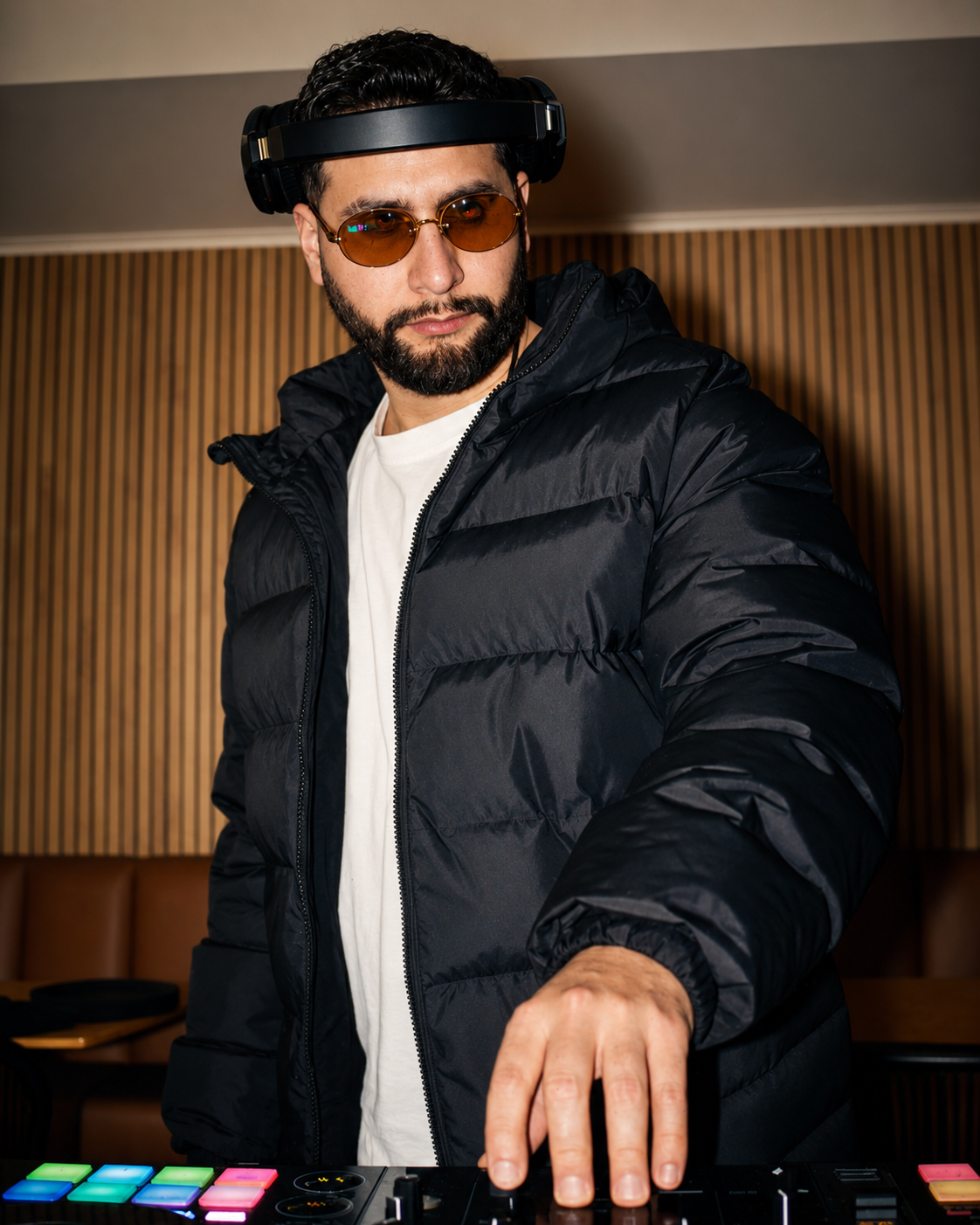
Derek Romero, In His Own Words: From Ciudad Bolívar to Latin House
This interview was conducted in Spanish. Derek Romero’s responses have been translated and lightly edited for clarity and length. His original Spanish responses are preserved throughout the interview.
Long before Derek Romero thought of himself primarily as a producer, he was a kid listening to his mother’s records, watching MTV and VH1, and imagining how he would change the music he heard.
Born in Venezuela’s Falcón state and raised for his first 19 years in Ciudad Bolívar, Romero’s path has since passed through Punta Arenas, Viña del Mar and Santiago, Chile. Along the way, music changed from an obsession into a profession — but the instinct behind it remained remarkably consistent: hear something, take it apart, and imagine another version.
That instinct eventually led from Virtual DJ and FL Studio to production, audio work, large stages, collaborations within the Latin music industry and, more recently, a deliberate return to electronic music.
For Romero, the current chapter is less about abandoning everything that came between those points than bringing it together. Latin House has become a way to reconnect with the EDM music that originally made him want to create while carrying forward the Latin influences and experiences accumulated along the way.
Before Production, There Was Curiosity
Cabilliant: What is your earliest memory of wanting to make or manipulate music?
Derek Romero: My relationship with music started when I was very young. At five or six, when I was home alone, I would listen to my mom’s records and watch MTV Unplugged or VH1 playlists. I listened to Linkin Park, The Verve, Avril Lavigne, Eminem and 50 Cent. I did not understand the songs at all, but I enjoyed them as if I did. A large part of my personality and style as an artist comes from that early-2000s period.
Around 12, I entered the world of EDM through artists like Tiësto, Gigi D’Agostino, Barcode Brothers and Basshunter. When I heard their music, I was always thinking about modifications I wanted to make — focusing songs more toward my taste or removing sections I did not like. I just had no idea how to do it.
Then I met two local DJs who worked at my mother’s business. I saw them mixing music on a phone, and even though it was very basic, it opened an entire universe of possibilities for me. They recommended Virtual DJ.
I did not own a PC, so wherever I went, if someone gave me access to a computer, I installed it. I just wanted to materialize the edits I had been imagining in my head.
Later, a close friend introduced me to FL Studio. When I saw the possibilities, it immediately became my main hobby — one I still have today and eventually managed to turn into a source of income.
Original Spanish
Mi relación con la música empezó desde muy niño. Tuve una infancia siempre ligada a ella; recuerdo que a los 5 o 6 años, cuando me quedaba solo en casa, escuchaba los discos de mi mamá y disfrutaba de los MTV Unplugged o de las playlists de VH1. Consumía bandas como Linkin Park, The Verve, o artistas como Avril Lavigne, Eminem, 50 Cent, quienes eran figuras icónicas de MTV, el canal que más veía. No entendía para nada sus canciones pero las disfrutaba como si lo hiciera. Gran parte de mi personalidad y estilo como artista proviene de esa época a principios de los años 2000.
A medida que fui creciendo, mi repertorio musical se amplió y, alrededor de los 12 años, entré en la cultura EDM. Descubrí a artistas como Tiësto, Gigi D’Agostino, Barcode Brothers o Basshunter. Al oír su música, siempre pensaba en hacerle modificaciones; quería enfocarla más a mi gusto y eliminar las partes que no me agradaban.
Poco tiempo después conocí a dos DJs locales. Un día los vi mezclando música en su celular. Era algo básico, pero a mí me abrió un universo de posibilidades. Ellos me recomendaron Virtual DJ de Atomix. Aunque yo no tenía una PC, eso no me detuvo: en cualquier lugar al que fuera, o persona que conociera que pudiera proporcionarme acceso a una computadora, instalaba el programa para poder materializar esas ediciones que tenía en mi cabeza desde niño.
Después un amigo muy cercano me recomendó FL Studio. Al ver las posibilidades infinitas que podía alcanzar, no dudé en convertirlo en mi hobby principal; un pasatiempo que mantengo hasta el día de hoy y que, con los años, logré convertir en una fuente de ingresos.
Growing Up Alongside Kendflow
Cabilliant: Kendflow remembers the two of you as neighbors spending countless hours listening, mixing and experimenting with music. How do you remember that period?
Derek Romero: We spent entire afternoons mixing, downloading music from forums or simply sharing our libraries. It expanded my repertoire tremendously and introduced me to more artists from the electronic scene. A lot of my more mature musical influences came directly from that period.
That was also when I transitioned from DJ software on a computer to using a professional physical mixer that Kendflow’s father had given him. We practiced until we really understood the technique, and those skills opened doors to local events, private parties and even radio.
It was thousands of hours of trial and error, but we were doing it entirely for the love of the art. That was something we connected through then, and it is something we have maintained to this day.
Original Spanish
Pasábamos tardes completas mezclando, descargando música en foros o simplemente compartiendo nuestras bibliotecas musicales. Esto expandió mucho más mi repertorio y me dio a conocer a otros artistas de la escena electrónica; de hecho, gran parte de mi influencia musical más madura viene directamente de esa época.
En ese momento hice mi transición de ser DJ de software en PC a usar un mezclador físico profesional que el padre de Kendflow le había regalado. Practicamos mucho hasta dominar la técnica, habilidades que nos abrieron puertas a eventos locales, fiestas privadas e incluso nos dieron acceso a la radio.
Fueron muchísimas horas de ensayo y error, pero era algo que hacíamos totalmente por amor al arte. Conectamos mucho en eso, y es algo que mantenemos hasta el día de hoy.
Producer First
Cabilliant: Cabilliant describes you as a producer, DJ, songwriter and audio professional. How do you define yourself?
Derek Romero: That description is pretty accurate. My beginnings were as a DJ, but production is what I ultimately developed much further.
If I had to put those roles in order, it would be: music producer and beatmaker first, audio professional second, DJ third and songwriter fourth.
Music production practically defines me as a person. Almost my entire life has revolved around it. That producer mentality has even migrated into other things I do, from cooking to the way I think about different areas of life. There are similarities between all of those processes, even if they are not obvious at first.
Original Spanish
Esa descripción no se aleja de la realidad. Con el pasar del tiempo, si bien mis inicios fueron como DJ, fue la producción lo que terminé perfeccionando mucho más.
Productor musical / Beatmaker
Profesional del audio
DJ
Compositor
La producción musical es algo que prácticamente me define como persona; casi toda mi vida ha girado en torno a ella. Esta mentalidad de productor ha migrado a otras aptitudes, como la cocina, e incluso a mi manera de pensar en otros ámbitos de la vida.
Leaving Electronic Music — and Finding the Way Back
Cabilliant: Your catalog has moved through EDM, house, urban music and other influences. How do you understand that evolution today?
Derek Romero: My sound was born in electronic music and EDM. Later I became interested in dancehall and eventually moombahton, which felt more familiar to a Latin audience. From there I moved toward the more pop-oriented side of tropical house.
Then opportunities connected me with DJ Nelson, and my sound evolved again as I began working around reggaetón, trap and pop.
But over the years I began to feel disconnected from my essence. I had learned how to work within urban music, but it was moving further away from the passion for EDM that made me begin in the first place.
Between 2024 and 2026, I decided to evolve the sound again and recover those roots while bringing in a more Latin element. That felt like the best way to continue enjoying the reason I started while also making music that could connect with the audience around me.
Today I connect deeply with Latin House and Afro House — percussion-heavy genres that can get close to something tribal and feel much more familiar to a Latin audience.
Original Spanish
Mi estilo nació con la música electrónica y la escena EDM. Luego, sin darme cuenta, empecé a interesarme por el dancehall y eventualmente por el moombahton, un género mucho más comercial y digerible para el público latino.
Después regresé al EDM pero enfocándome en una vertiente mucho más pop: el tropical house.
A través de contactos en común logré conectar con DJ Nelson. Esto me llevó a evolucionar mi sonido y a adaptarme, ya que comenzaron a llegar oportunidades para trabajar con artistas de reggaetón, trap y pop.
Sin embargo, con el paso de los años me comencé a sentir desconectado de lo que era mi esencia. Si bien logré dominar el estilo urbano, no era una música que me llenara el espíritu; se alejaba mucho de la pasión por la música EDM por la cual había empezado en todo esto.
Por eso, el período entre 2024 y 2026 ha sido la etapa donde decidí evolucionar mi sonido nuevamente para recuperar mis raíces, pero aportando un toque más latino.
He podido conectar profundamente con el latin house y el afro house, géneros muy percusivos que rozan lo tribal y que le resultan mucho más familiares al público latino.
The Records That Still Feel Like Derek Romero
Cabilliant: Of everything you have released, what projects feel most representative of you?
Derek Romero: Without a doubt, Life Sounds I, II and III, along with the Last Train Home EP with Kendflow.
There is a combination of sounds in those projects where I feel our essence as a team is completely embedded. They are not perfect records and they were not made to be commercial. We were simply kids again, creating from the passion and art that define us without allowing the pressure of the current industry to dictate what we were doing.
Now, in 2026, while going through another musical rebranding, I feel those projects still represent who I am as a producer.
Original Spanish
Sin lugar a dudas, los proyectos de Life Sounds 1, 2 y 3, además del EP Last Train Home junto a Kendflow. Es una combinación de sonidos donde encuentro que nuestra esencia como equipo está totalmente impregnada.
No son sonidos perfectos ni comerciales; simplemente fuimos niños otra vez, creando algo desde la pasión y el arte que nos define, sin dejarnos llevar por la presión de la industria actual.
Ahora en este 2026, en medio de mi rebranding musical, siento que esos proyectos representan fielmente lo que soy como productor musical.
Cabilliant: You have said Last Train Home deserves more context. What was happening when you made it?
Derek Romero: I remember it as a real catharsis. I was going through a complicated emotional period and wanted to drain all of it through the thing I know best as a way of communicating: music.
It is an EP filled with melancholy and the closing of internal cycles. I was beginning to question whether the decisions I had made regarding my career were the right ones because I had moved so far away from what originally brought me there.
Original Spanish
Lo recuerdo como una verdadera catarsis. Fue un momento en el que me encontraba emocionalmente complicado y quise drenarlo todo a través de lo que mejor sé hacer para comunicarme: la música.
Es un EP lleno de mucha melancolía y cierre de ciclos internos, donde comenzaba a preguntarme si las decisiones que había tomado en relación con mi carrera habían sido las correctas, ya que me había alejado mucho de lo que me había llevado hasta ahí.
Inside the DJ Nelson Connection
Cabilliant: How did your relationship with DJ Nelson develop from an industry connection into direct musical collaboration?
Derek Romero: It began through mutual contacts. Kendflow connected me with Alfred Sánchez, known as NOPY, who already had a long relationship with DJ Nelson.
Through consistent work, I gradually earned Alfred’s trust and stayed close to Nelson’s circle. Over time I had more direct contact with Nelson and began contributing to different projects, from production work to support around Babywine.
By 2026, Nelson and I began working on a new direction together: creating electronic music and exploring ways to bring elements of his catalog into House.
Original Spanish
Todo comenzó a raíz de contactos en común. Es ahí cuando Kendflow me hace el acercamiento con NOPY, seudónimo de Alfred Sánchez, quien ya mantenía una relación de muchos años con DJ Nelson.
Con el pasar del tiempo y a base de trabajo constante, comencé a ganarme la confianza y validación de Alfred. Como muestra de apoyo, me mantuvo cerca del círculo de DJ Nelson; cada vez que salía alguna oportunidad en la que él pudiera influir, me tomaba en cuenta.
Poco a poco comencé a tener más contacto directo con Nelson y fui formando parte de distintos proyectos, además de prestar apoyo en producciones relacionadas con Babywine.
Hasta que, en este 2026, DJ Nelson y yo comenzamos un nuevo proyecto: la intención es crear un nuevo catálogo musical y convertir sus clásicos al género house.
A New Language: Latin House
Cabilliant: En la Nota feels like a clear statement of this new direction. What were you trying to create?
Derek Romero: We wanted a Latin sound with relaxed, simple vocals that could work equally well at a party or during a sunset on the beach — something danceable that still carried the atmosphere of an EDM rave.
The vocals function more like another instrument. They are not supposed to be the protagonist. It is the combination of all the elements that creates the lifestyle and energy of the record.
Original Spanish
Quisimos lograr un sonido latino, con voces relajadas y sencillas, pero que fuese igualmente disfrutable en un ambiente de fiesta o en atardeceres en la playa; algo bailable y acorde a la vibra de las raves de la escena EDM.
Las voces funcionan como un instrumento más y no pretenden ser las protagonistas; es el conjunto de todos los elementos lo que ayuda a transmitir ese lifestyle de fiesta.
Cabilliant: How do you know when one of those records is finished?
Derek Romero: When I listen to it and my body instinctively stops asking for another change.
For mixing and mastering, I like to leave the record alone for a while and come back with fresh ears. Then I make the processing decisions needed to reach the volume and clarity of the reference records I am using.
Original Spanish
¿Cómo sé cuándo está terminada? Simplemente cuando al escucharla, el cuerpo instintivamente no me pide ningún cambio ni agregar nada más.
En cuanto a los balances de mezcla y mastering, dejo pasar un buen tiempo para luego, con oídos frescos, realizar todo el procesamiento necesario hasta alcanzar el volumen y la claridad de mis canciones de referencia.
From 100 People to an Arena
Cabilliant: What changed for you after opening for Jay Wheeler at Movistar Arena in Santiago?
Derek Romero: My biggest event before that had been no more than around 100 people. Going from that to an audience of more than 30,000 across two shows changes anyone’s perspective.
It changed the way I saw people in entertainment too. I stopped looking at them entirely from the perspective of a fan and began seeing them more as people I could potentially work alongside.
It also changed the way I see myself. I still have insecurities on stage like anyone else, but that experience helped me believe in myself more because there was now a real history behind that belief.
Original Spanish
Mi mayor evento había sido de no más de 100 personas, y pasar de ahí a un público de más de 30.000 en dos funciones, sin duda, le cambia la vida a cualquiera.
Esta experiencia cambió mi perspectiva sobre las personas que se dedican al mundo del espectáculo. Entendí que son personas igual que yo; crecieron y se desarrollaron en contextos distintos, pero son humanos al fin y al cabo. Esto me llevó a dejar de verlos desde el punto de vista de un fanático, para empezar a verlos más como compañeros de trabajo.
Cambió mucho la forma en cómo me veo. Si bien no puedo negar que sigo sintiendo inseguridades en el escenario como cualquier persona, esta etapa me ha ayudado paralelamente a “creérmelo más”, respaldado por todo el recorrido que he tenido ligado al mundo del espectáculo.
Energy
Cabilliant: If you had to describe a Derek Romero DJ set in one word, what would it be?
Derek Romero: Energy.
I used to move across several genres when I recorded sets. Today I am much more focused on Latin House, although I do not intend to completely leave other styles behind when the moment calls for them.
Original Spanish
Si pudiera describirlo en una palabra sería “energía”. Aunque antiguamente me gustaba pasear por distintos géneros musicales al momento de grabar, hoy por hoy estoy enfocado en el Latin House, aunque no pretendo dejar de lado en casos puntuales otros géneros musicales.
For the Archive
Cabilliant: If someone looks through the Derek Romero archive 20 years from now, what should they understand that the releases alone cannot explain?
Derek Romero: My music can only be fully appreciated when you understand the context in which it was created.
There are many emotions inside my songs because I compose from happiness, euphoria, sadness, confidence, lust, passion, nostalgia, melancholy and even apathy.
I do not like limiting myself to one emotion because, like anyone else, I change. Depending on the context and the moment of life you are in, one song may connect with you more than another.
My emotions move, and when I create, my intention is to connect with the people who might be feeling exactly what I am feeling at that moment.
Original Spanish
Mi música solo puede ser apreciada al 100% si se entiende el contexto en el que fue creada. Hay muchas emociones plasmadas en mis canciones, ya que suelo componerlas desde la alegría, la euforia, la tristeza, la seguridad, la lujuria, la pasión, la nostalgia, la melancolía o incluso la apatía, por mencionar solo algunas.
Me gusta no limitarme a una sola emoción definida al cien por ciento porque, como cualquier ser humano, soy cambiante. Dependiendo del contexto y del momento de la vida en el que te encuentres, una canción conectará más o menos contigo.
Mis emociones fluyen y, al momento de crear, mi intención es conectar con ese grupo de personas que podría estar sintiéndose exactamente igual que yo en ese instante.